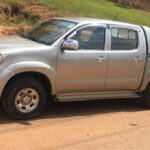
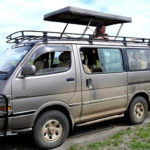
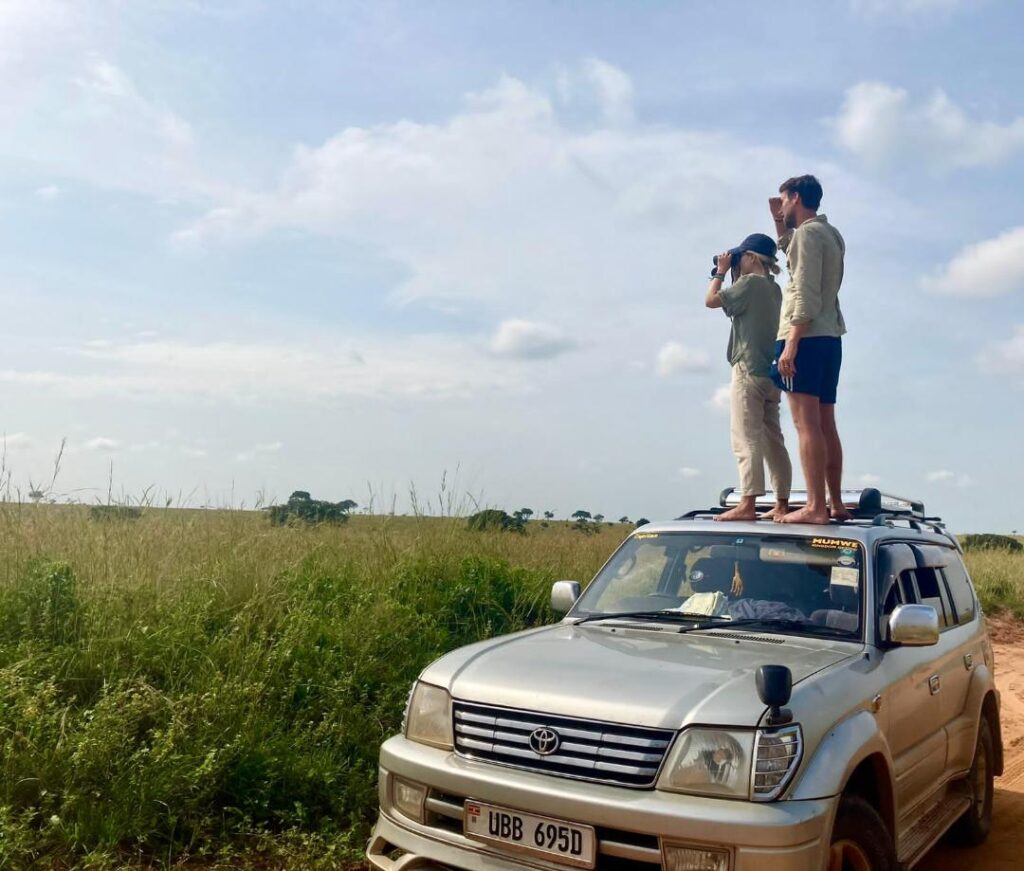
Rwanda is one of the easiest countries in Africa to self-drive. The roads are well maintained, signage is clear, driving is on the right, and the distances between the three big draws — Akagera National Park, Volcanoes National Park, and Nyungwe Forest — are short by regional standards. But “easy” doesn’t mean “any car will do.” The tarmac ends the moment you turn off the main highways, and the park roads themselves are a different world entirely: steep volcanic tracks around Musanze, rutted murram loops through Akagera’s savanna, and narrow forest roads climbing into Nyungwe. This guide walks through exactly what you need to rent and drive a 4×4 safari vehicle in Rwanda — the paperwork, the vehicle choice, the road conditions, and the costs.
Why a 4×4, Specifically
A 4×4 sends power to all four wheels at once rather than two, which is the difference between traction and wheelspin on loose or wet surfaces. In Rwanda this matters less on the highways — which are genuinely good — and much more once you’re inside the parks. Most national park roads are unpaved murram, a compacted red laterite soil that turns slippery in rain and develops deep ruts in the dry season from repeated vehicle traffic. Volcanoes National Park’s approach roads are also steep and volcanic, climbing quickly into the foothills around Musanze. A standard sedan can handle the intercity tarmac without much trouble, but it will struggle — or simply get stuck — on any of the three parks’ internal roads. For a Rwanda safari itinerary that includes gorilla trekking, chimp tracking, or a game drive, a 4×4 isn’t a luxury upsell; it’s the vehicle category that actually gets you there.
Choosing Your Vehicle
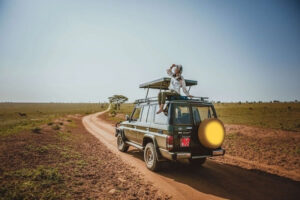
The default choice for Rwanda self drive safari is a Toyota Land Cruiser — either the Prado (automatic, generally petrol, comfortable for couples or small groups) or the tougher 76-Series (manual, diesel, built for rough terrain and long-range fuel tanks). Both are available with a pop-up roof, which lets passengers stand for unobstructed game viewing and photography — genuinely useful in Akagera, and handy for spotting golden monkeys on the Virunga slopes.
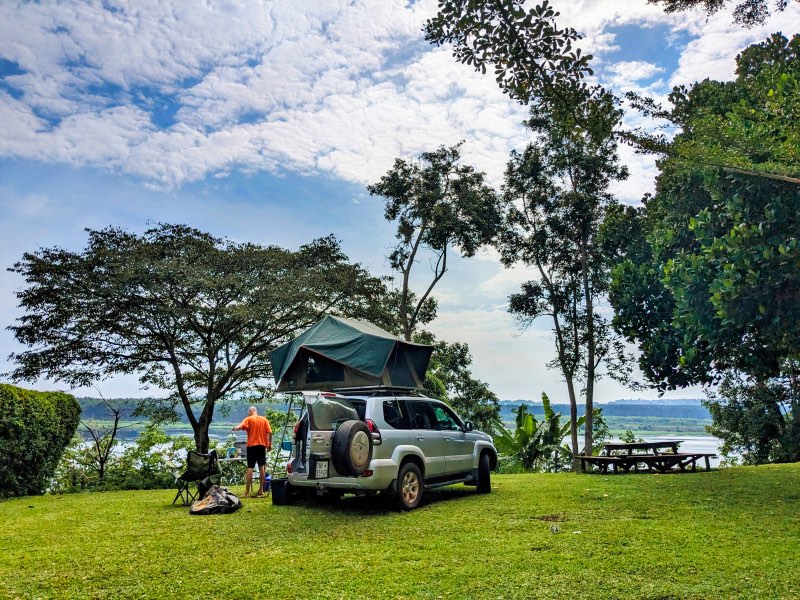
A few configuration choices to think through before booking:
- Pop-up roof vs. standard roof. Worth the small premium if game viewing and photography are a priority; skip it if you’re mainly doing gorilla/chimp trekking, where the roof stays closed anyway.
- Rooftop tent vs. ground tent vs. no camping gear. Akagera has public campsites and is the most popular self-drive camping destination in the country. Nyungwe and Volcanoes have more limited camping space due to colder, wetter conditions at altitude, so many self-drivers book lodges for those legs and camp only in Akagera.
- Manual vs. automatic. The 76-Series Land Cruiser is typically manual; the Prado is usually automatic. If you’re not confident with manual transmission on steep, loose terrain, specify automatic when booking.
- Seating. Extended Land Cruisers seat up to seven and include extras like a fridge — worth it for families or small groups splitting the daily rate.
- Long-range fuel tank. Useful if your route includes Akagera’s more remote northern sector, where fuel stations are sparse.
What You Need to Rent and Drive
Requirements vary a little between rental companies, but the consistent core is:
- A valid driver’s licence from your home country, generally expected to have been held for at least one to two years.
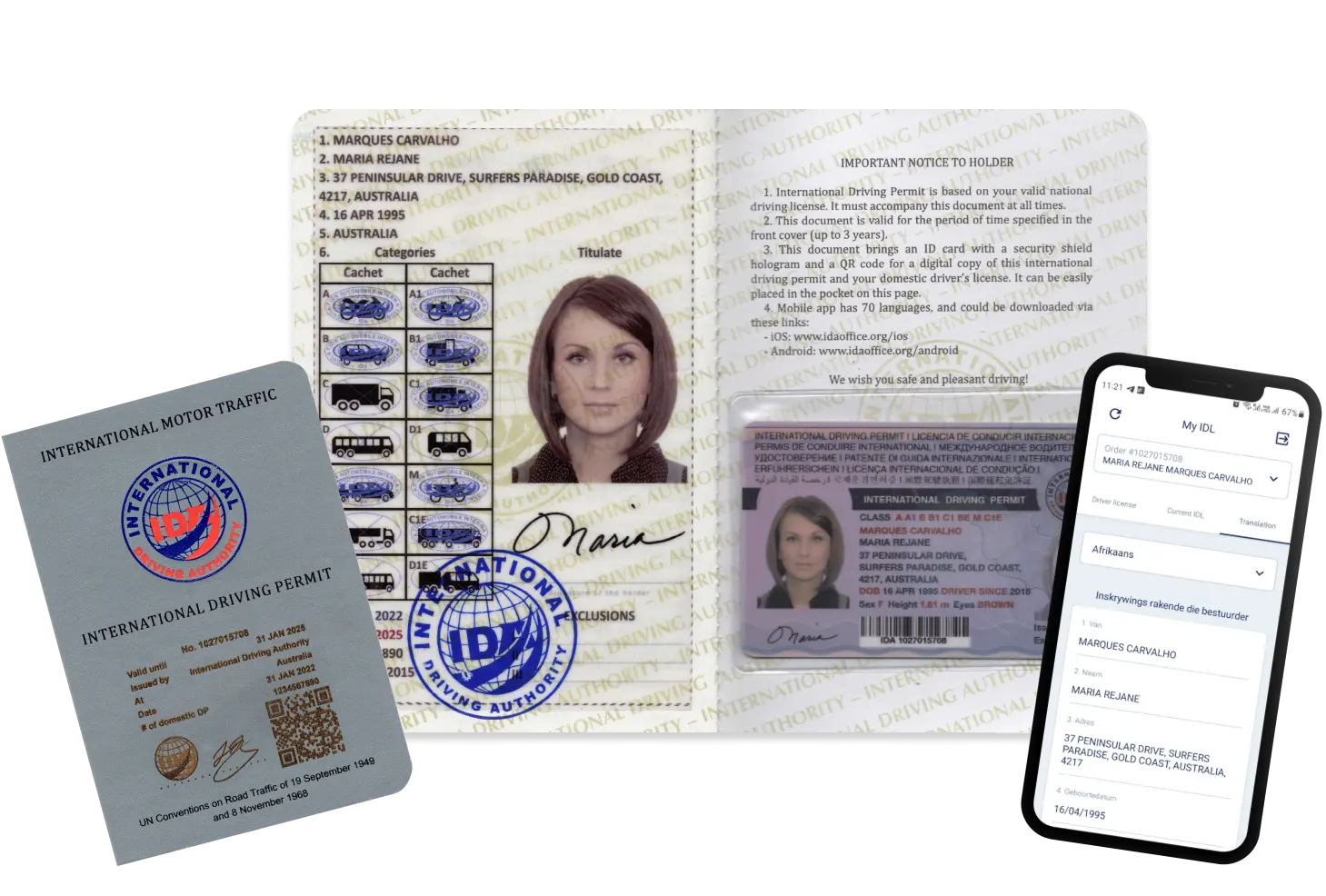
- An International Driving Permit (IDP) — not always strictly compulsory if your home licence is printed in English or French, but strongly recommended and often requested at police checkpoints and by rental companies regardless. If your licence uses a non-Latin script (Arabic, Chinese, Russian, etc.), an IDP is effectively mandatory.
- A valid passport with at least six months’ remaining validity, plus your Rwandan visa or entry stamp.
- Minimum age: Rwanda’s legal driving age is 18, but rental companies set their own, higher thresholds — typically 21 to 25, with some requiring drivers to be under 65–70 for insurance purposes. Younger drivers should expect a surcharge where permitted at all.
- A refundable security deposit, usually held on a credit card, typically ranging from around $300 to $1,000 depending on the vehicle category.
- Insurance: third-party cover is mandatory, and comprehensive cover is strongly advised. Confirm exactly what’s included before you sign, especially windscreen, tyre, and undercarriage damage — common wear points on murram roads.
Foreign visitors can generally drive on their home licence for up to 90 days from arrival; longer stays require applying for a Rwandan licence through the Rwanda National Police. This covers the vast majority of self-drive holidaymakers, who rarely stay anywhere near that long.
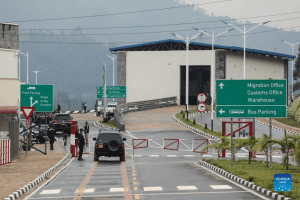
If your plans include crossing into Uganda, Tanzania, Burundi, or DRC, you’ll need a cross-border clearance letter from the rental company — arrange this at the time of booking, not at the border.
Road Conditions: Highway vs. Park Roads
Rwanda’s main intercity routes — Kigali to Musanze, Kigali to Huye/Butare, Kigali to Rusizi via Nyungwe — are sealed, well signed, and generally in good condition, which is part of why the country has a reputation as one of Africa’s more approachable self-drive destinations. The Rwanda National Police maintain a visible presence on major routes and enforce traffic rules consistently, including speed limits that are lower and more strictly applied than many visitors expect.
The picture changes once you leave the highway:
- Akagera National Park: internal game-viewing tracks are unpaved murram, doable in the dry season with care but noticeably rougher after rain. A 4×4 is recommended rather than strictly mandatory here, since the sector loop roads are graded periodically.
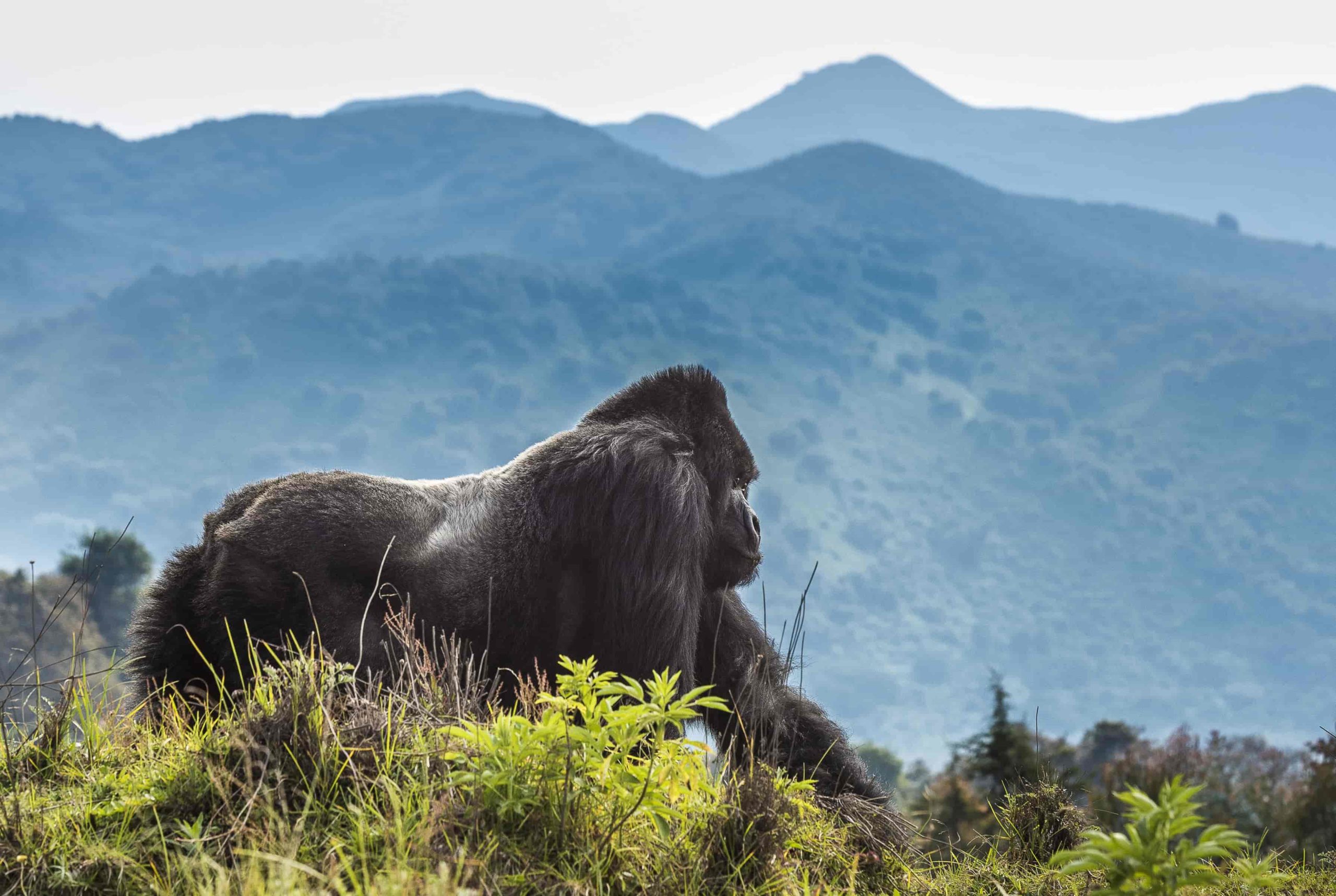
- Volcanoes National Park: the approach roads from Musanze into the park are steep, volcanic, and often the roughest short stretch of any Rwanda self-drive itinerary — this is the one leg where a 4×4 is genuinely non-negotiable, particularly in the March–May and October–November rains.
- Nyungwe Forest: roads through the forest are narrow, winding, and climb through montane terrain; good tyres and a confident driver matter as much as the drivetrain here.
If your trip falls inside either rainy season, treat 4×4 as mandatory for all three parks rather than optional. Outside those windows, the highways and Akagera’s main loops are manageable in a well-driven 2WD, but you lose flexibility and comfort compared with a proper safari 4×4.
Park Fees to Budget For
Fees vary by residency category (international visitor, foreign resident, East African Community citizen) and are worth confirming directly with each park before travel, since rates are revised periodically. As a planning guide:
Akagera National Park
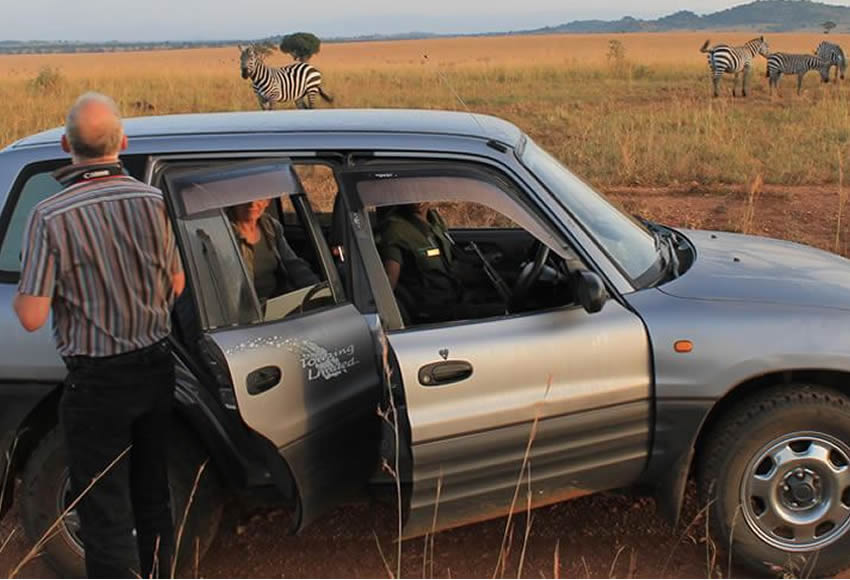
- International visitor entry: around $100 per adult per day, $50 per child (ages 6–12 pay half; under 6 free at most parks).
- Vehicle entry fee: around $10/day for foreign-registered vehicles, considerably less for Rwandan-registered ones.
- Optional self-drive guide (recommended, not required): roughly $25 for a half day, $40 for a full day — genuinely useful, since local guides know where wildlife has been active recently.
- Multi-night stays get progressively cheaper: the entry fee typically drops by half on the second and third nights, and becomes free from the fourth night for stays up to a week.
Volcanoes National Park
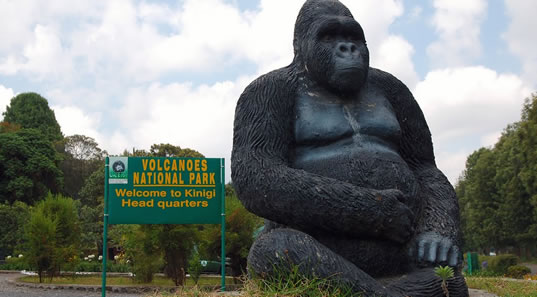
- General park entry: roughly $20 per person per day, separate from the gorilla trekking permit itself.
- Gorilla trekking permit: around $1,500 per person, booked through the Rwanda Development Board — this needs to be secured months in advance regardless of your vehicle arrangements.
Nyungwe Forest National Park
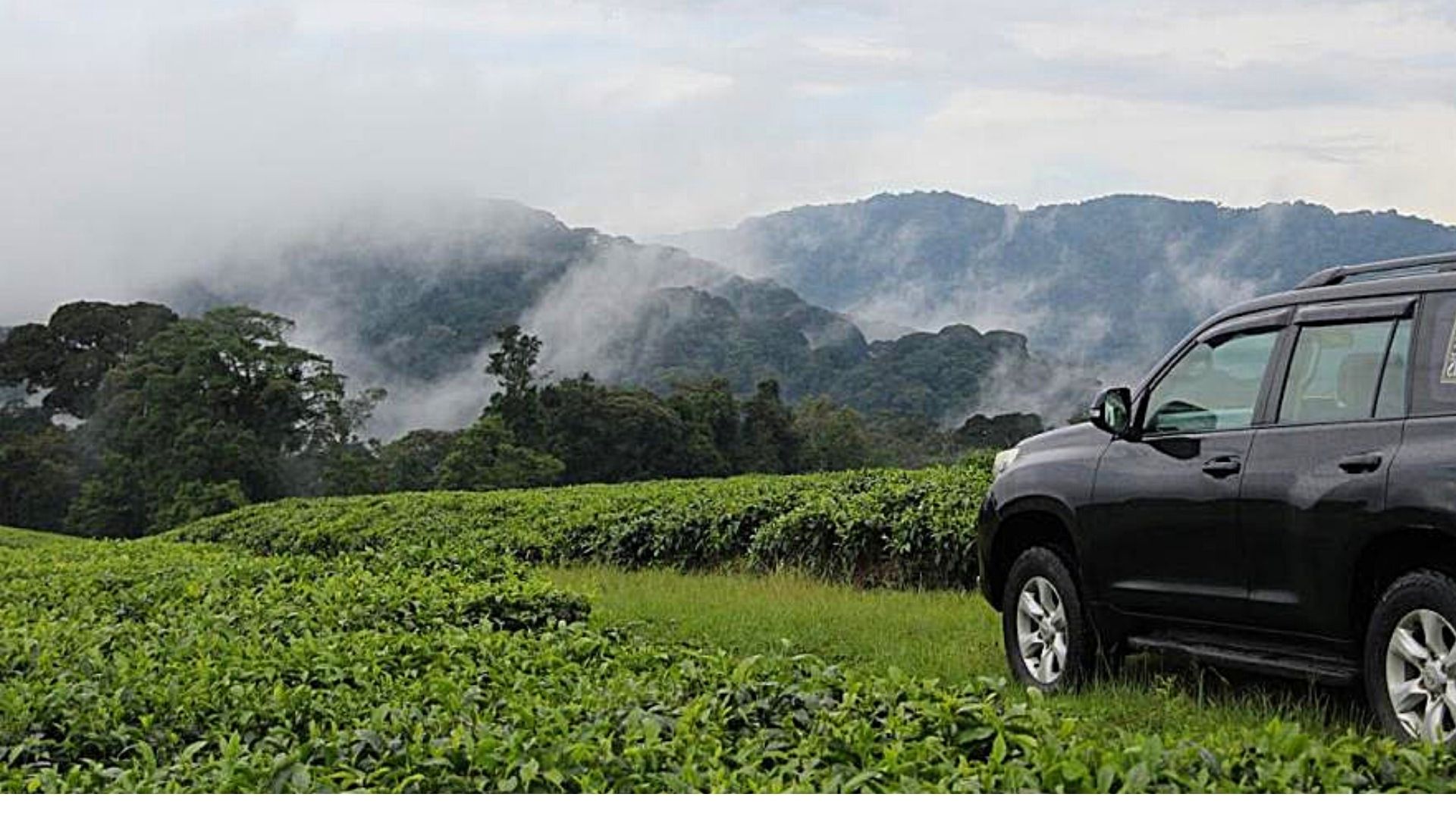
- General park entry: roughly $40 per person per day, with chimpanzee tracking and canopy walk permits priced separately.
Across a full three-park circuit, budget roughly $80–$120 in fuel for the loop (excluding permits), on top of your daily vehicle rental rate, which commonly starts around $45–$100/day depending on vehicle class, season, and whether camping gear is included.
Self-Drive vs. Driver-Guided: An Honest Trade-Off
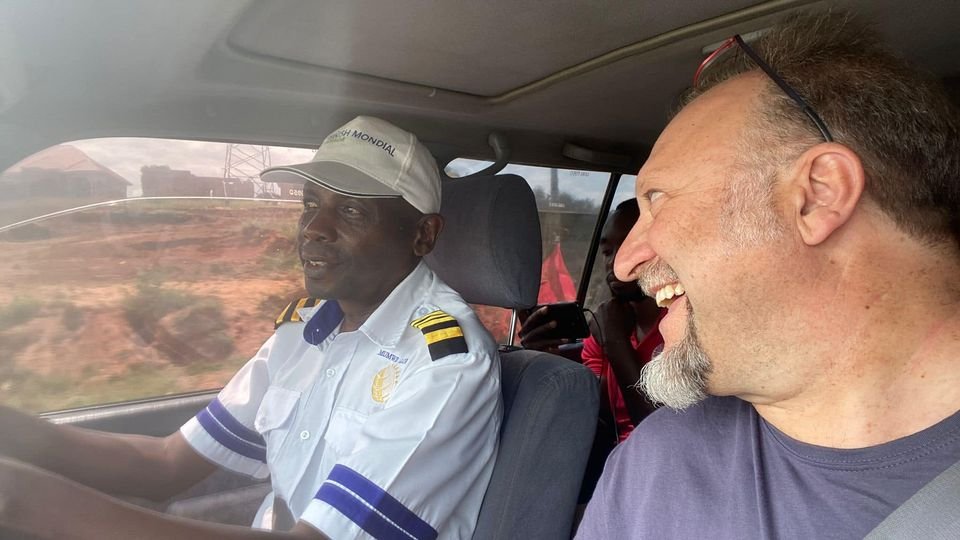
Self-driving in Rwanda is genuinely more approachable than in most of the region, but it’s worth being honest about where a driver-guide earns their fee. Gorilla trekking permits require precise 7 a.m. starts at park headquarters; unfamiliar mountain roads in the dark or in rain add real risk for a first-time visitor navigating on the right-hand side for the first time. Many self-drivers split the difference: they self-drive the highways and Akagera, where the stakes and the driving are both easier, and hire a local guide or driver for the Volcanoes leg specifically. Akagera also offers optional freelance guides who can join your own vehicle for the day — a good middle ground that keeps you behind the wheel while adding local wildlife knowledge.
Practical Tips Before You Set Off
- Inspect the vehicle thoroughly at pickup — tyres (including the spare), fluid levels, toolkit, jack, and any camping extras — and photograph any existing damage before you drive away.
- Carry your physical licence, not a photo of it; checkpoints and rental staff expect the original document.
- Fuel up before entering any park — stations inside and immediately around Akagera, Volcanoes, and Nyungwe are limited, and a long-range tank is genuinely useful for Akagera’s northern loop.
- Confirm what your insurance actually covers before you’re on a murram track — tyre and undercarriage damage are the most common claims on Rwanda’s rougher park roads.
- Carry cash in both USD and Rwandan francs for park gates and incidentals, alongside a card for deposits and larger payments.
- Download offline maps before leaving Kigali; coverage thins out in rural stretches and inside the parks themselves.
- If your itinerary crosses into a neighbouring country, sort the cross-border clearance letter with your rental company in advance — it isn’t something you can arrange at the border itself.
Quick Prep-departure Checklist
- 4×4 Land Cruiser (Prado or 76-Series) with pop-up roof if game viewing is a priority
- Home driver’s licence (1–2 years’ standing) plus IDP
- Passport with 6+ months’ validity and valid Rwandan visa/entry stamp
- Credit card for the security deposit ($300–$1,000 range)
- Confirmed comprehensive insurance, including tyre/undercarriage cover
- Cross-border clearance letter if visiting Uganda, Tanzania, Burundi, or DRC
- Cash (USD + RWF) for park gates, plus gorilla/chimp permits booked in advance
- Offline maps downloaded and a full tank before entering any park
Rwanda’s combination of good highways, clear rules, and compact distances makes it one of the more forgiving self-drive safari destinations on the continent — provided the vehicle underneath you is actually built for where you’re going. Get the 4×4, sort the paperwork before you land, and the rest of the “Land of a Thousand Hills” is remarkably easy to explore on your own terms.
More Stories
Cross Border Car Rental: Driving from Rwanda to Uganda
Rent a Car in Rwanda For Self Drive & With A Driver
Renting a Car in Rwanda With Kids: Safety & Child Seat Tips