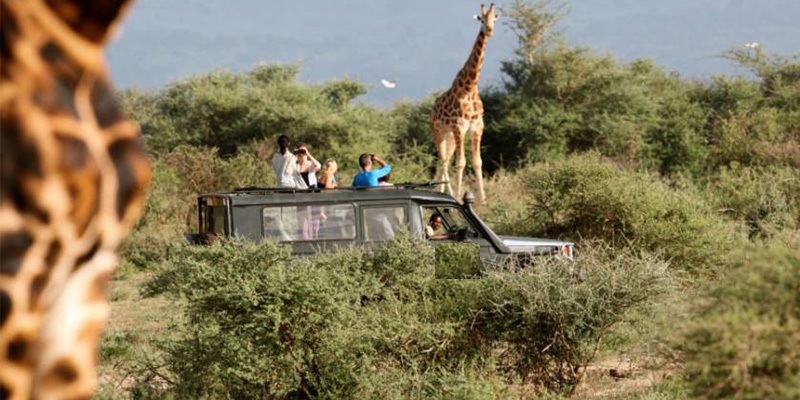
When most people think of Rwanda‘s wildlife, mountain gorillas dominate the conversation. But tucked away in the country’s northeastern corner, just 2.5 hours from Kigali, lies one of Africa’s most extraordinary and quietly spectacular parks — Akagera National Park, Home to all of Africa’s Big Five, a vast wetland complex, over 500 bird species, and a conservation story that has captured the attention of National Geographic, Akagera is Rwanda’s great safari secret.
And here is the question that many self-reliant travelers ask before booking: Can I actually drive myself through Akagera?
The answer is yes — and this guide from Rwanda Car Rental Services tells you exactly how to do it well.
Akagera National Park: An Overview
Akagera National Park is Rwanda’s largest protected area, covering 1,122 square kilometers of savannah, wetlands, rolling hills, and woodland along the country’s eastern border with Tanzania. Founded in 1934 by the Belgian colonial government, it is also one of Africa’s oldest national parks and is the only true savannah game park in Rwanda.
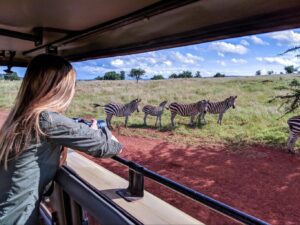
What sets Akagera apart from many of East Africa’s more famous parks is not just its wildlife — it is the layered ecological diversity you pass through in a single day. The southern region is dominated by lakes, papyrus swamps, and dense shrubland, offering extraordinary waterborne wildlife including hippos, crocodiles, and a dazzling array of water birds. The central zone transitions through acacia woodland and riverine forest. The north opens into sweeping open plains where lions hunt, rhinos graze, and enormous herds of buffalo move like slow brown rivers through the tall grass.
Akagera is also Africa’s largest protected wetland in Central-Eastern Africa, with a complex network of lakes and papyrus swamps making up over a third of the park.
Managed jointly by the Rwanda Development Board (RDB) and the international non-profit African Parks since 2010, the park has undergone one of the most remarkable wildlife recoveries on the continent.
The Big Five in Akagera: A Conservation Comeback Story
To appreciate what you are about to experience on a self-drive through Akagera, you need to understand where the park has come from. Just two decades ago, many of the animals you will encounter today did not exist within the park at all.
The Near-Collapse
Rwanda’s civil war and the 1994 genocide were catastrophic for Akagera. Poachers had devastated wildlife populations for decades, and following the genocide, large numbers of returning refugees settled inside the park boundaries, reducing its size significantly — from over 2,500 square kilometres to just around 1,000 square kilometres. Wildlife lost critical habitat and migration routes. Lions disappeared entirely. Rhinos were hunted to local extinction.
When African Parks took over co-management in 2010, they found a park in crisis. The partnership launched a $10 million restoration program, constructing a 120-kilometer western boundary fence to control encroachment, deploying anti-poaching helicopters and canine units, and beginning the painstaking process of rewilding the ecosystem from the ground up.
The Remarkable Recovery
The results speak for themselves. The large mammal population increased from 4,000 animals in 2010 to over 13,500 in 2018. Tourism grew from 8,000 visitors in 2010 to over 67,000 in 2025. The park has become a model of what conservation-tourism integration can achieve.
Now meet the Big Five you will encounter on your self-drive:
1. Lions
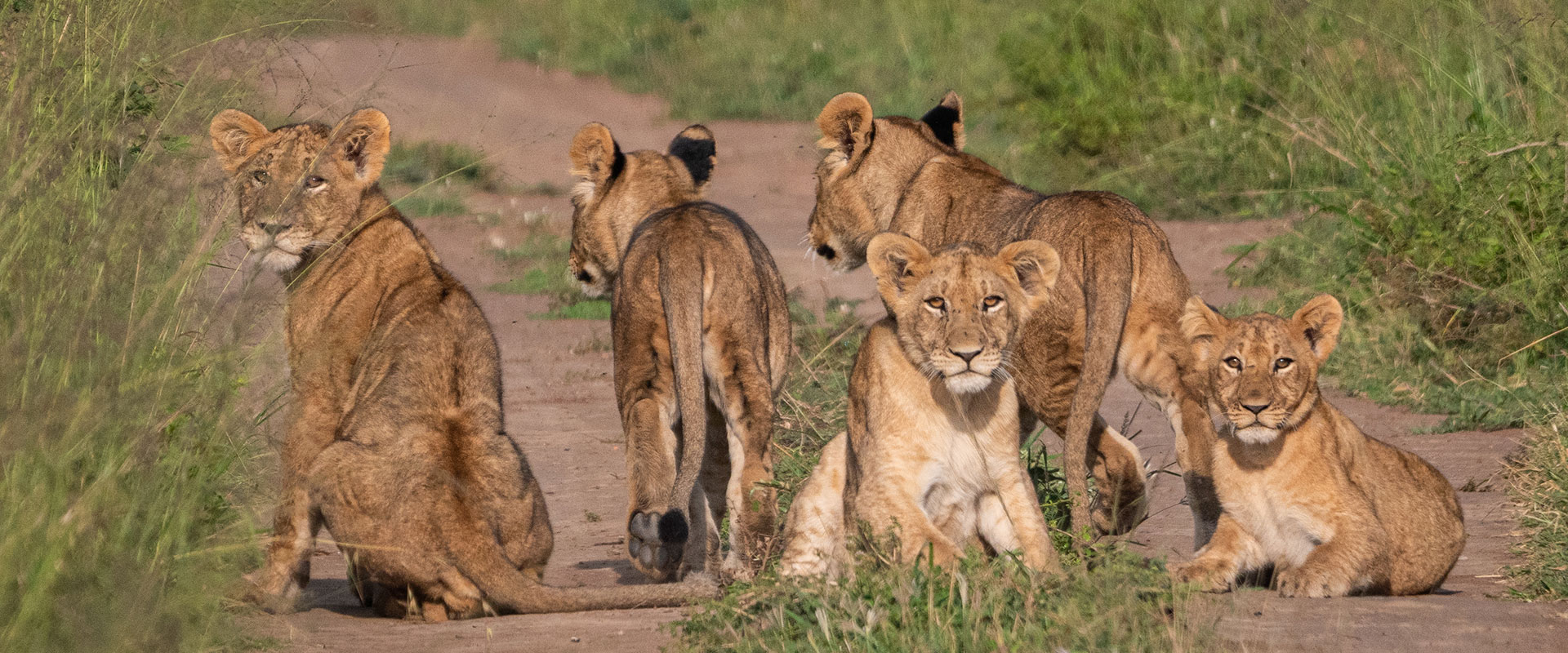
Lions were reintroduced to Akagera in 2015, after being absent from Rwanda entirely. Since their return, the pride has grown significantly. They are most frequently spotted in the northern savannah, where they stalk sprawling herds of topi and zebras. Today, the lion population has grown from zero to 58 individuals — one of the most celebrated rewilding achievements in Africa. For the best chance of sighting them, plan to be in the northern section of the park during early morning game drives, when lions are most active after a night of hunting.
2. Rhinos — Both Species
Akagera is uniquely special in that it hosts two species of rhinoceros — the critically endangered eastern black rhino and the southern white rhino — making it one of the very few parks in Africa to offer this.
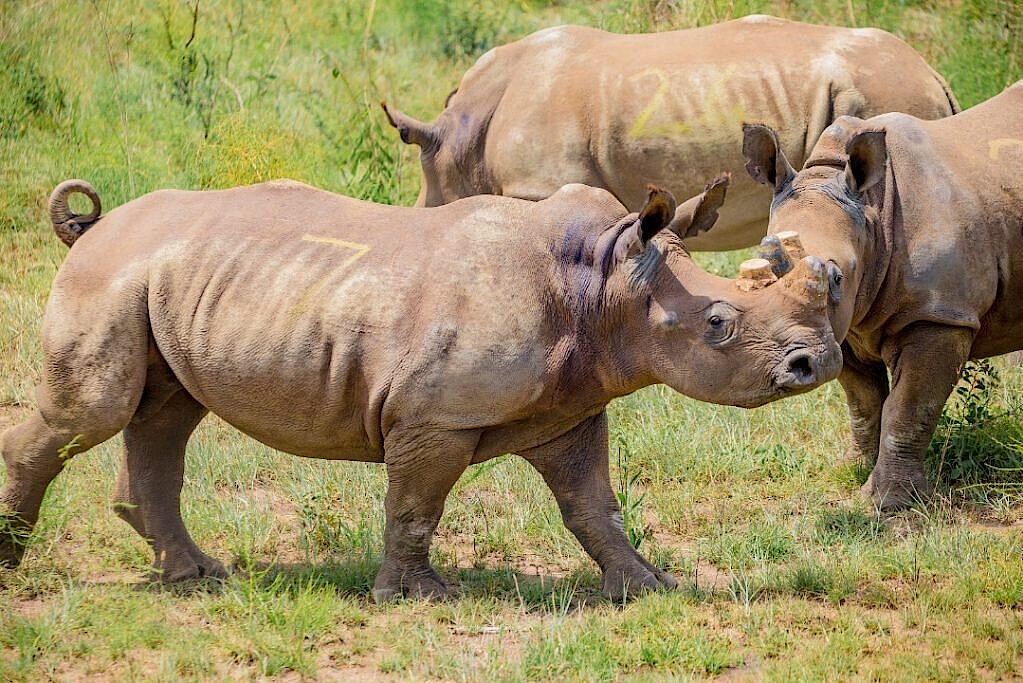
In May 2017, African Parks in conjunction with the Rwanda Development Board and the Howard G. Buffett Foundation translocated 18 eastern black rhinos from South Africa back into Akagera National Park, marking the return of rhinos to Rwanda after a 10-year absence.
Then, in a landmark moment for global conservation, in June 2025, a further 70 southern white rhinoceroses were translocated to Akagera National Park from the Munywana Conservancy in South Africa, in what remains the largest single rhinoceros translocation ever recorded.
Black rhinos tend to favor the southern section of the park with its denser forests and acacia woodlands, while white rhinos inhabit the open grasslands of the north. Sightings are not guaranteed on every visit, but rangers conduct specialist rhino tracking drives that dramatically improve your chances.
3. Elephants
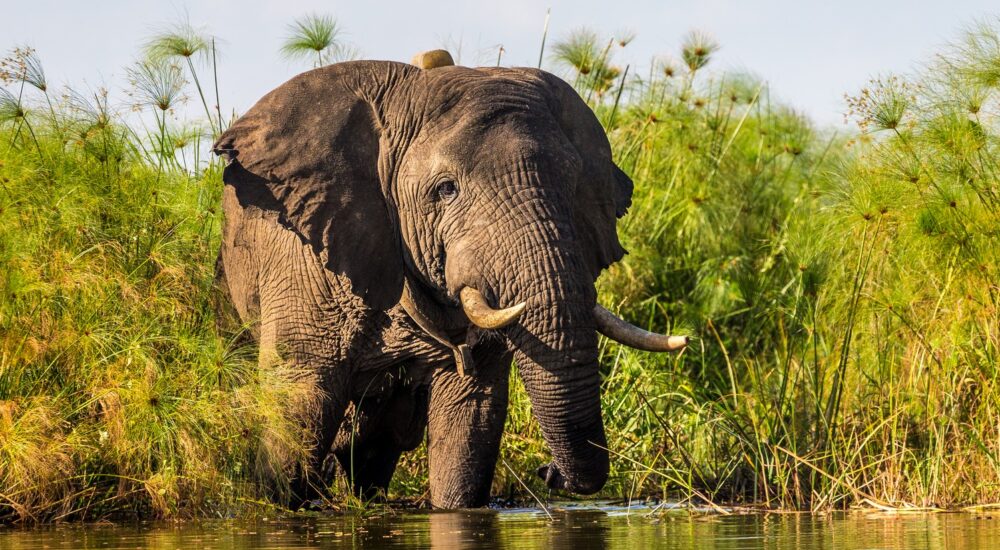
Over 100 elephants inhabit Akagera National Park and are among the easiest of the Big Five to spot on a safari. These are forest-savannah elephants that move freely across the park’s terrain, often gathering near Lake Ihema and the park’s numerous waterholes, particularly during the dry season. Watching a matriarch lead her family to drink at the lake’s edge as the sun sets over the hills is among the most serene wildlife experiences Rwanda has to offer.
4. African Buffalo
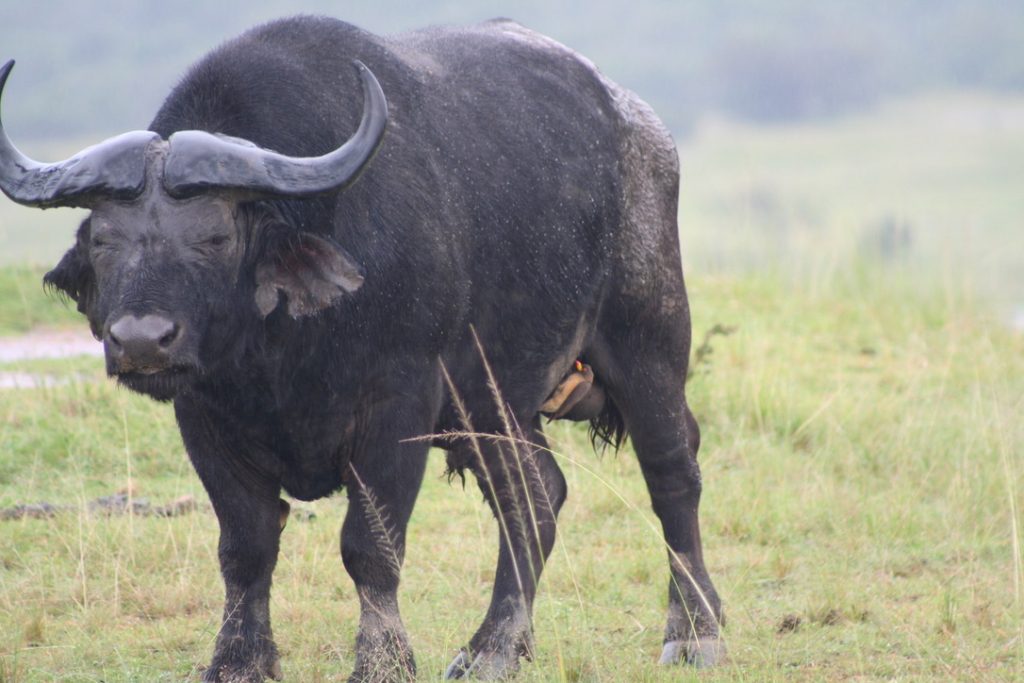
The buffalo is the most common member of the Big Five in Akagera National Park — with about 4,000 individuals in the park, mostly inhabiting the northern region. Herds can number in the hundreds, moving in tight formations across the open plains. Despite their deceptively placid appearance, buffalo are considered among Africa’s most dangerous animals, and your vehicle provides the perfect safe vantage point to observe them up close.
5. Leopard
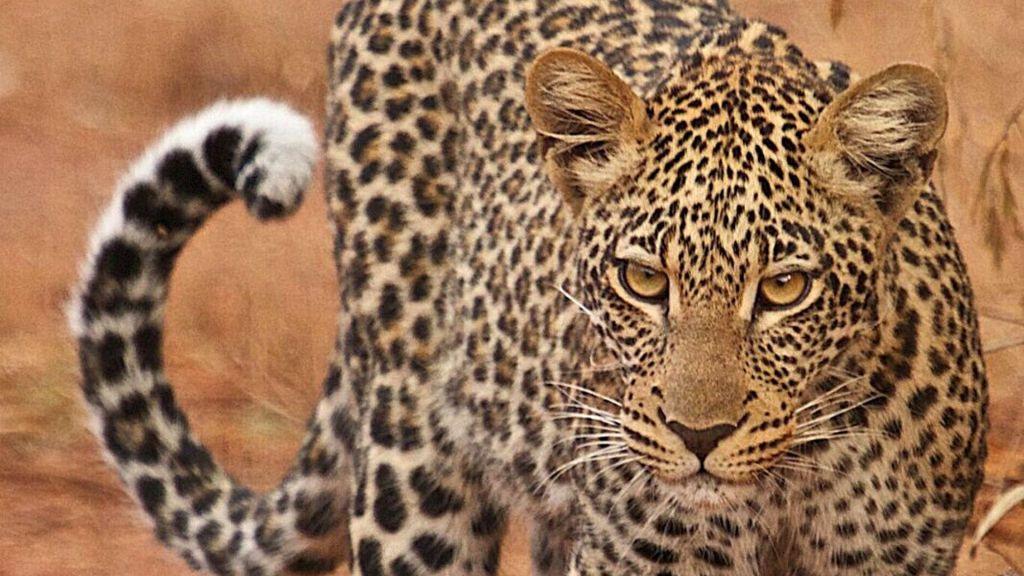
The leopard is the most elusive member of Akagera’s Big Five. Visitors often spot leopards during night game drives, and many consider the sighting pure luck, remembering it as the highlight of their entire safari. By day, they conceal themselves in the branches of acacia trees or deep within the dense woodland. If spotting a leopard is a priority, a night game drive is your best opportunity — and even then, patience and luck both play a role.
Can You Self-Drive Akagera National Park?
Yes. Akagera National Park is one of the few game parks in Rwanda — and indeed in East Africa — where self-drive safaris are permitted and actively welcomed. Unlike guided tours, a self-drive safari provides flexibility and adventure: you set the pace, linger at a waterhole to watch elephants, follow fresh animal tracks, or adjust your route spontaneously. This independence allows for a more personal experience while often saving money for families or groups.
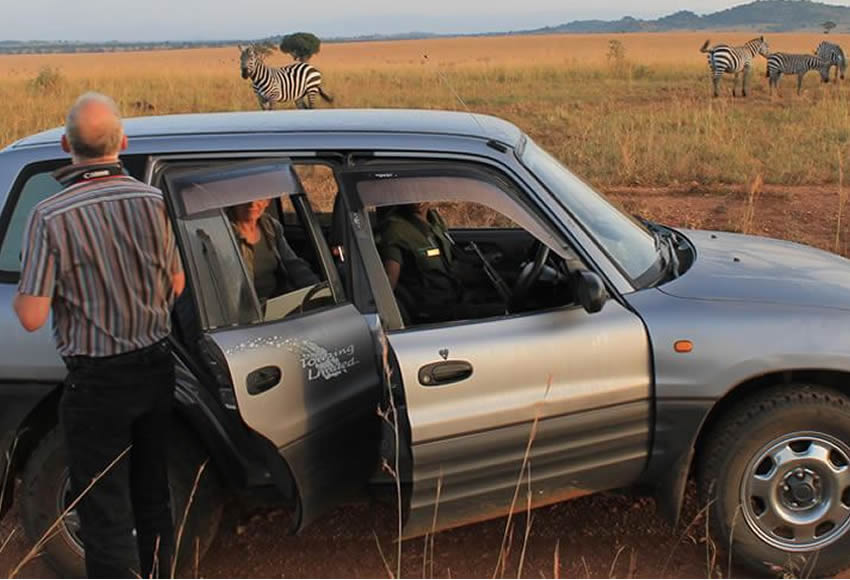
However, self-driving in a Big Five park is fundamentally different from driving in the city. Understanding the terrain, the rules, and the right vehicle choice is essential.
What Vehicle Do You Need for a Self-Drive in Akagera?
This is where Rwanda Car Rental Services becomes your most important planning partner.
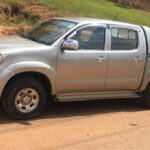
A four-wheel-drive vehicle works best for exploring Akagera, particularly in the northern park areas where terrain becomes more challenging and remote. Your vehicle must be in excellent condition, especially during the rainy season when some roads become completely impassable.
A standard saloon car or 2WD vehicle is inadequate for a serious Akagera game drive. The park’s tracks — especially in the north — are unpaved, rutted, and subject to significant mud during the wet season. Deep puddles, sandy stretches, and steep inclines are common. Getting stuck without a reliable 4WD and recovery equipment in a Big Five park is not a situation you want to be in.
Our Recommended Vehicles for Akagera
Rwanda Car Rental Services offers a range of 4WD vehicles suited to self-drive game driving in Akagera national park:
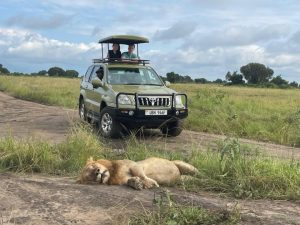
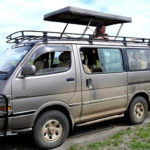
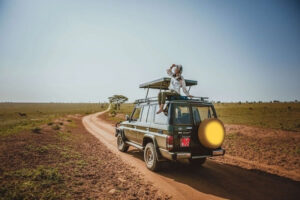
Toyota Land Cruiser (Pop-Up Roof) — The gold standard for game drives. The elevated roofline allows for standing wildlife photography across the vast northern plains, and the vehicle’s ground clearance and traction handle every terrain the park throws at it.
Toyota Land Cruiser Prado — An excellent option for small groups or couples seeking a balance between comfort and capability. Strong 4WD performance with a spacious interior.
Nissan Patrol / Safari Van — Ideal for groups of 4–7 travelers, offering generous cargo space for luggage and camera equipment alongside robust off-road capability.
All Rwanda Car Rental Services vehicles are provided fully maintained and road-ready, with spare tires, a jack, recovery rope, and basic tools — essentials for any remote game drive. We also provide GPS navigation and, on request, printed park maps with route recommendations.
Park Rules and Regulations Every Self-Driver Must Know
Akagera is a managed Big Five wilderness. Rules are strictly enforced, and violations carry financial penalties. Before you enter the gate, ensure every member of your group is aware of the following:
Opening Hours: The park is open to day visitors from 6:00 AM to 6:00 PM. Failure to exit the park by 6:30 PM will trigger a rescue operation, and the lost party will incur all costs of the search. Plan your routes to ensure you reach the exit gate with time to spare.
Speed Limit: Drivers are strictly required to drive below 40 km/h (25 mph) inside the park. Speeding raises accident risk significantly, as animals cross tracks at any time. A $100 fine applies to speeding violations.
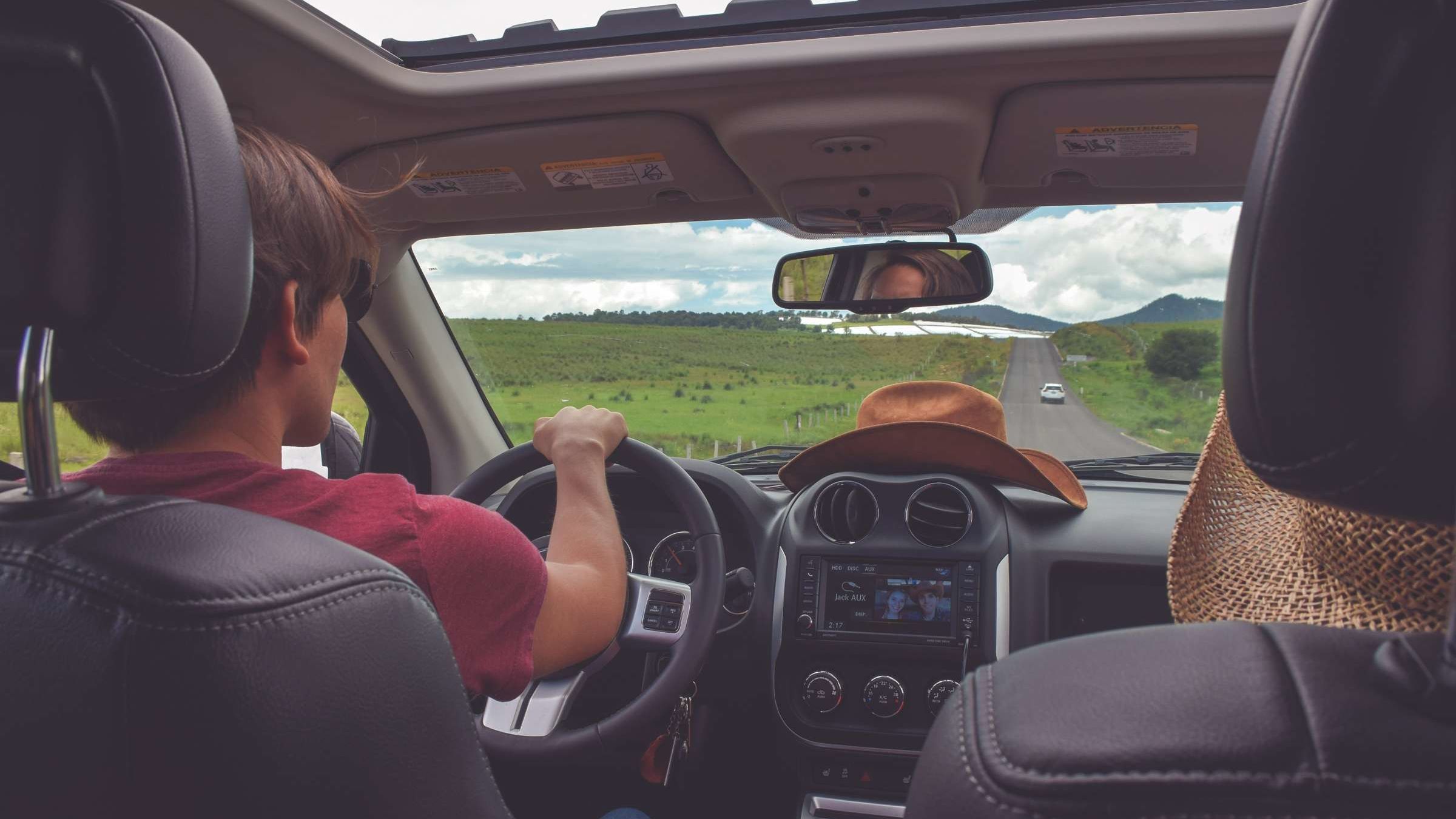
Stay on Designated Tracks: Driving off-road is prohibited and carries a $100 fine. Off-road driving damages vegetation and can cause you to become lost in a park where wildlife may pose a danger if you exit your vehicle.
Stay Inside Your Vehicle: Visitors must remain inside their vehicle while on a game drive. You may only leave your vehicle upon arrival at your lodge, a designated picnic site, or a designated viewpoint.
No Horn Use: Using your vehicle’s horn inside the park is prohibited and carries a $100 fine. Loud sounds disturb wildlife and destroy the atmosphere for other visitors.
No Firearms, No Pets: Firearms are strictly prohibited inside the park. Pets — including dogs, cats, and birds — are not permitted under any circumstances.
No Feeding Wildlife: Never attempt to feed any animal, whether at your lodge or during a game drive. This is dangerous to both you and the animal.
No Littering: Rwanda is a meticulously clean country. Single-use plastic bags are banned nationally and will be confiscated at Kigali International Airport. Do not leave any waste inside the park.
Fines: A fine of $150 applies for breaking any park rule. Follow all regulations to avoid penalties and, more importantly, to ensure your safety and the welfare of the animals.
Entry Fees and What They Cover
Park entry fees are structured by residency status: international tourists, foreign residents of Rwanda, and East African Community nationals each have different rate tiers. Children aged 6–12 receive a 50% discount, and children under 6 enter free of charge. These fees cover general park access, including self-drive game viewing if you have your own 4×4 vehicle.
If you are driving into the park, vehicle fees apply separately from entry fees. Akagera accepts cash in US Dollars and Rwandan Francs, Visa and Mastercard credit and debit cards, as well as MTN Mobile Money and Airtel Money — a convenient option for those already in Rwanda.
Always confirm current fee rates before your visit, as these are subject to annual review by the RDB and African Parks.
Should You Hire a Park Guide?
Self-driving is permitted and can be deeply rewarding. However, there is a compelling case for adding a local park guide to your self-drive experience — especially if seeing lions or rhinos is high on your priority list.
For approximately $25–$40, a local guide will join your vehicle. Their “wildlife eyes” locate lions and rhinos that untrained visitors frequently miss — animals hidden in thickets or lying motionless in the shade of a lone acacia tree.
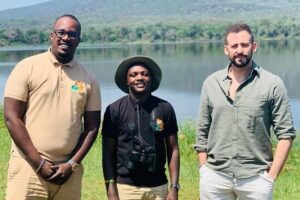
Guides also know the current movement patterns of specific prides and rhino individuals, updated daily through radio communication with park rangers. They understand which waterholes are active in a given season, which sections of northern plain are producing predator sightings, and how to read the bush for signs of animal presence that an untrained eye simply cannot detect.
Our recommendation from Rwanda Car Rental Services: hire a guide for at least your first full day in the park, particularly if you are driving a pop-up roof vehicle and want to maximize photography opportunities. On your second day, if you are staying overnight, many visitors enjoy a more relaxed self-guided morning drive with the benefit of the previous day’s orientation.
The South-to-North Game Drive Route
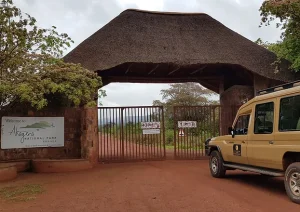
Game drives in Akagera follow a complete south-to-north route taking up to seven hours from the southern entrance to the northern exit. There are two main entry gates: the Akagera South Gate (closest to Kigali) and the Akagera North Gate.
The Southern Zone is the first area you encounter from the main south entrance. It is defined by its network of lakes — particularly Lake Ihema, which is the park’s largest and most productive wildlife lake. This is where boat safaris operate, where hippos lounge in vast pods, and where enormous Nile crocodiles sun themselves on the banks. The shrubland around the southern lakes is ideal for buffalo and elephant sightings, and the birdwatching here is extraordinary.
The Central Zone transitions through mixed woodland, riverine forest, and open savannah. Giraffes — with a population that has grown to 78 individuals as of 2024 — are commonly spotted in this section, browsing the tops of acacia trees with their characteristic unhurried elegance. Zebra, impala, waterbuck, topi, and reedbuck are abundant here throughout the year.
The Northern Zone is where the drama concentrates. The open plains provide unhindered visibility across vast distances — ideal for spotting the park’s lion prides as they move through the grasslands, and for finding the white rhino herds that graze in the more open terrain. This is where the best predator sightings occur, and where sunrise game drives produce the most spectacular wildlife encounters.
Most day visitors entering through the south gate plan a full south-to-north circuit, exiting through the north gate, which connects to the road network toward Musanze. Rwanda Car Rental Services can arrange a vehicle drop-off and pickup between gates if you plan a one-way circuit.
Beyond the Game Drive: Other Activities in Akagera
A self-drive safari gives you control over your game drives, but Akagera offers several additional activities worth building into your itinerary:
Boat Safari on Lake Ihema — This is not optional; it is one of the finest wildlife experiences Rwanda offers. As you drift along the papyrus-fringed banks, you encounter massive pods of hippos and some of the largest Nile crocodiles on the continent. Birdwatchers will find paradise here, with over 500 recorded species including the rare Shoebill stork and the vivid Malachite kingfisher. The 2.5-hour morning boat cruise is priced at approximately $40 per person.
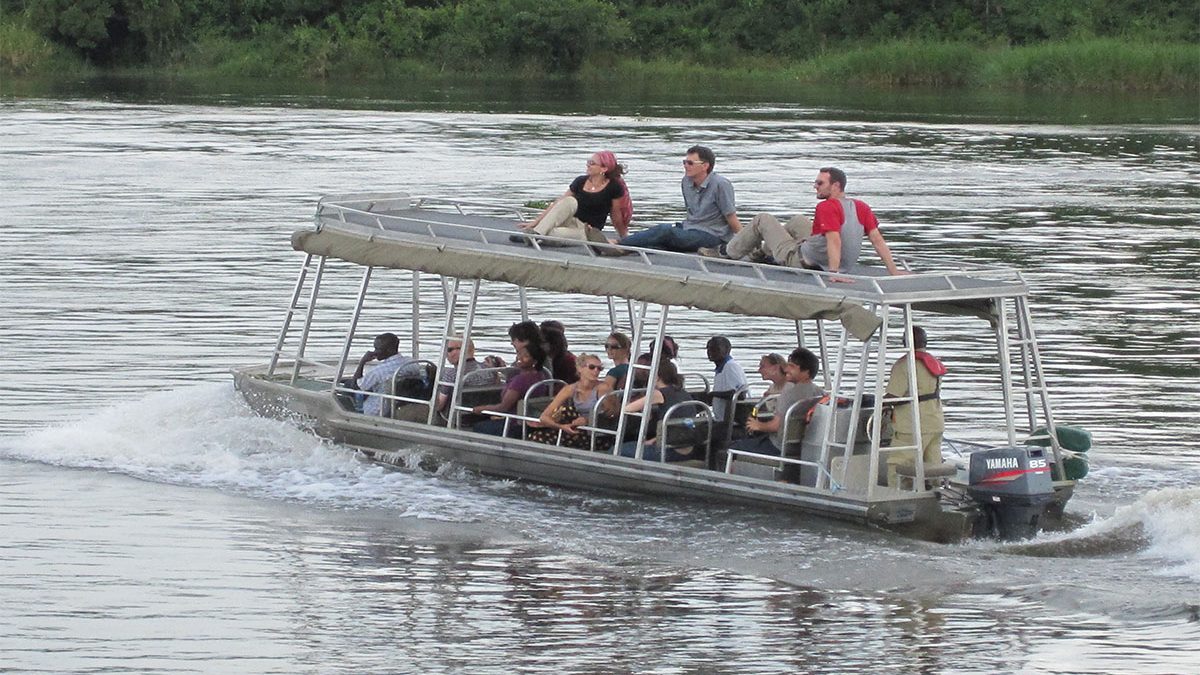
Night Game Drive — These 2.5-hour excursions begin just as the sun dips below the horizon. Using powerful spotlights, guides reveal a side of the park that daytime visitors miss — the glint of a leopard’s eyes, civets scurrying through the underbrush, and the eerie calls of bushbabies echoing through the dark. Guides often locate lions beginning their nocturnal hunts during these hours. Night drives cost approximately $25 per person and must be booked through the park.
Guided Walking Safari — Walking safaris, traditionally guided by rangers, are an intimate way to become acquainted with the bush, allowing you to move silently and tune into subtle sights and sounds — animal tracks, droppings, and the small details invisible from a moving vehicle.
Rhino Tracking — A specialist ranger-led experience focusing on monitoring and viewing the park’s recently expanded rhino population. Guests of Karenge Bush Camp can now join rangers on a morning rhino trek as part of the ongoing program to monitor the rhinos introduced to the park in 2025.
Sport Fishing — Lake Ihema supports healthy tilapia and other freshwater fish populations. Fishing permits cost approximately $25 per person per day, and visitors must bring their own equipment.
Where to Stay: Accommodation in and Around Akagera
For a complete self-drive safari experience, staying overnight inside or near the park is highly recommended. Pre-dawn starts are essential for the best wildlife sightings, and the logistics of a same-day Kigali return make early morning drives difficult.
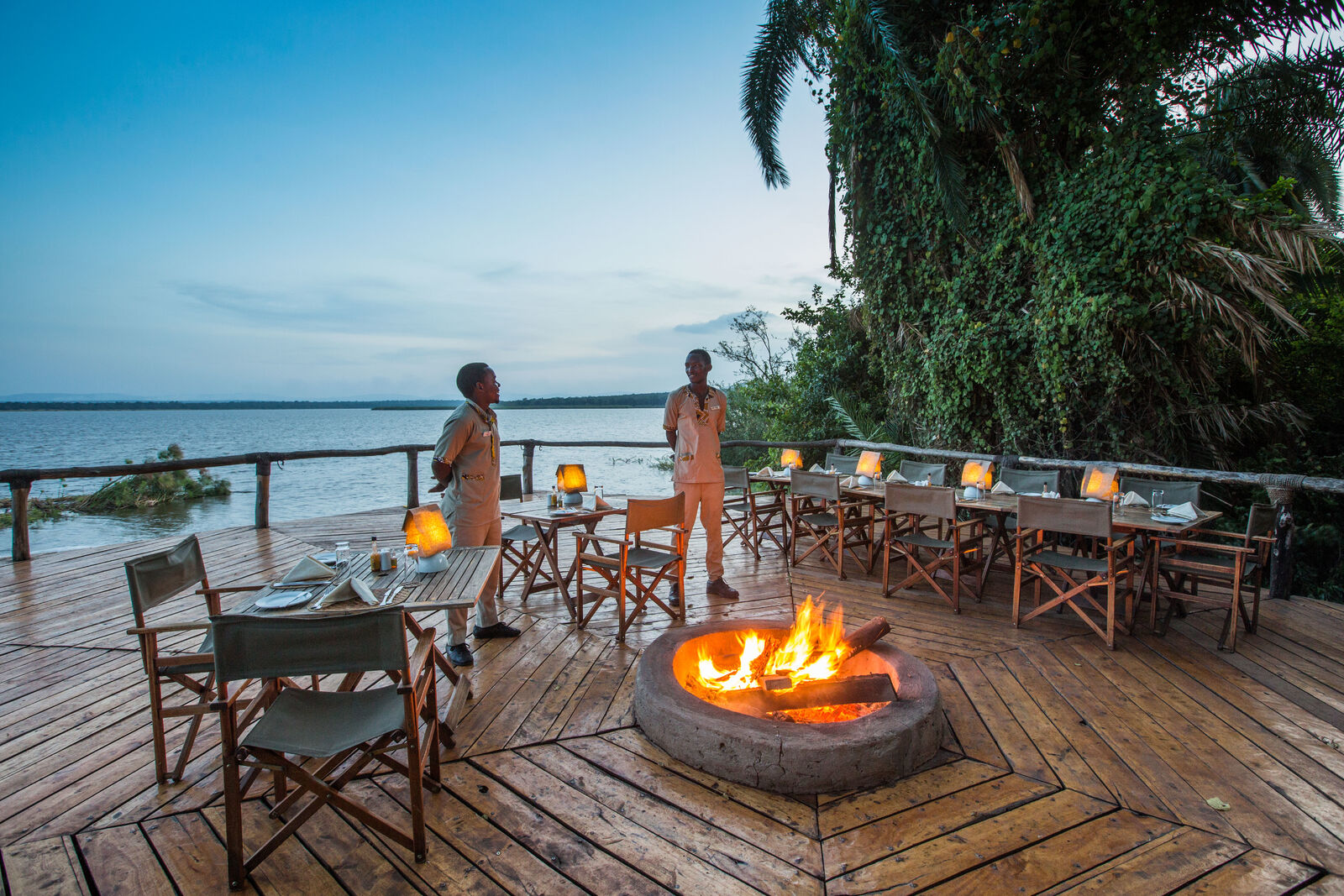
Wilderness Magashi — The park’s most exclusive offering, located in the remote northeastern Magashi Conservancy. Wilderness Magashi opened in 2019 and features spacious, solar-powered accommodation blending natural materials with forest surroundings. A new Magashi Peninsula camp opened in late 2025 on the edge of Lake Rwanyakazinga. Full-board rates include guided game drives and walks.
Ruzizi Tented Lodge — An eco-luxury lodge on the shores of Lake Ihema offering canvas tents with lake views and direct proximity to the southern game drive circuits. Well-positioned for the Lake Ihema boat safari.
Karenge Bush Camp — A mid-range seasonal camp with six canvas tents offering an authentic wilderness atmosphere at a more accessible price point. The camp has recently been renovated and now offers ranger-led rhino treks.
Akagera Game Lodge — Set on a ridge overlooking Lake Ihema, this established lodge offers comfortable rooms, a restaurant, swimming pool, and easy access to both the lake and the central game drive circuit. A solid option for those who prefer a more conventional lodge experience.
Rhino Lodge — Simple, well-designed self-catering accommodation a short drive from the southern gate, making it a practical and affordable base for budget-conscious self-drivers.
Best Time to Self-Drive Akagera
Dry Season (June–September & December–February): This is the optimal period for game viewing. Lower vegetation makes animals easier to spot, and tracks are firm and consistently drivable in your 4WD. Wildlife concentrates around permanent water sources, making sightings more predictable — particularly for the Big Five. Book accommodation 3–6 months in advance for peak season visits.
Green Season (March–May & October–November): The park transforms into a lush, vibrant landscape during the rains — spectacular for photography and birdwatching. Newborn animals are abundant in the late wet season months. Tracks can become muddy and some routes are temporarily impassable, making a capable 4WD vehicle non-negotiable. Fewer visitors mean a more exclusive experience, and lodge rates are often lower.
Getting to Akagera from Kigali
Akagera National Park is located approximately 100 kilometers east of Kigali, in the Kayonza district. The drive takes roughly 2 to 2.5 hours on the well-maintained Eastern Province road. The route is straightforward and well-signposted from the capital.
Drive with Rwanda Car Rental Services
Whether you want the freedom of a self-drive or the comfort of a private driver-guide, Rwanda Car Rental Services provides the most reliable and cost-effective transport solution for your Akagera safari:
Self-Drive 4WD Rental — Collect your vehicle from our Kigali office (or arrange airport delivery), drive at your own pace, and park inside the gates on your own schedule. Ideal for experienced drivers who value complete independence.
Private Driver-Guided Transfer — Our professional drivers handle all navigation, leaving you free to watch the landscape unfold on the drive east, and to focus entirely on wildlife once inside the park. Many visitors combine a private driver for the Kigali–Akagera journey with self-guided game drives once inside.
Full Safari Transport Package — For multi-day itineraries combining Akagera with Volcanoes National Park (gorillas) or Nyungwe Forest (chimpanzees), Rwanda Car Rental Services can arrange seamless inter-park transfers, ensuring you never miss a morning briefing or an early gate opening.
Combining Akagera with a Wider Rwanda Safari
Akagera pairs naturally with Rwanda’s other wildlife destinations, and combining parks is both logistically straightforward and financially smart — a stay of two or more nights in Akagera or Nyungwe qualifies you for the 30% low-season discount on your Volcanoes National Park gorilla permit (valid November–May, excluding peak months).
A popular 5–7 day Rwanda circuit with Rwanda Car Rental Services typically covers:
- Day 1–2: Kigali — Genocide Memorial, Kigali City Tour, rest and acclimatization
- Day 3–4: Akagera National Park — Big Five self-drive game drives, Lake Ihema boat safari, overnight in the park
- Day 5: Transfer to Musanze — Drive northwest via Kigali or on the northern circuit road
- Day 6: Volcanoes National Park — Gorilla trekking permit briefing at Kinigi, 1-hour gorilla encounter
- Day 7: Return to Kigali — Optional golden monkey tracking or return at leisure
Rwanda’s compact size makes this circuit entirely achievable without flying between destinations — a significant cost advantage over comparable multi-park safaris in Tanzania or Kenya.
What to Pack for Your Akagera Self-Drive
Packing for Akagera is simpler than gorilla trekking, but the savannah environment has its own requirements:
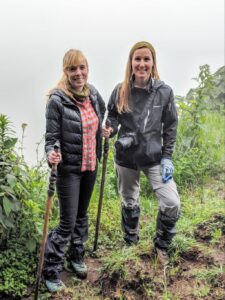
- Neutral-colored clothing — khaki, beige, and olive green. Avoid bright colors that startle wildlife. Blue and black attract tsetse flies.
- Light layers — mornings in the park can be surprisingly cool, particularly in the wet season. A fleece or light jacket for early game drives is essential.
- Wide-brimmed hat and high-SPF sunscreen — the savannah offers minimal shade once you are out of the woodland zones.
- Insect repellent — particularly important near the wetland areas of the south.
- Binoculars — even with a pop-up roof vehicle, quality binoculars significantly enhance your game viewing at distance.
- Camera with zoom lens — a 200mm–400mm lens is ideal for wildlife photography from a vehicle.
- Water (at least 2 liters per person per day) — the savannah heat is significant during the dry season.
- Snacks and a packed lunch — unless you are staying at a lodge, food options inside the park are limited.
- Park map and/or offline GPS — mobile signal is patchy inside the park. Download offline maps before you enter, and Rwanda Car Rental Services can provide printed route guidance on request.
Frequently Asked Questions
Is Akagera safe for self-driving? Yes. Akagera is a very well-managed park with a strong ranger presence. The key safety rules — staying inside your vehicle at all times, following designated tracks, and exiting before 6:00 PM — are in place to protect both visitors and wildlife. As long as these are followed, self-drive safari is a very safe and rewarding experience.
How long should I spend in Akagera? A minimum of two days is strongly recommended, especially if seeing all five members of the Big Five is your goal. Leopards and rhinos are elusive and may not be encountered on a single-day drive. A two-night stay allows for two full game drive circuits plus a boat safari and, ideally, a night drive.
Can I self-drive Akagera in a regular rental car? No. A 4WD vehicle is essential, particularly for the northern section of the park and during the wet season. Rwanda Car Rental Services does not recommend self-driving Akagera in a 2WD vehicle under any circumstances.
Do I need to book a guide in advance? Park guides can be arranged at the gate, but advance booking through Rwanda Car Rental Services or directly with the park is recommended during peak season, when guide availability may be limited.
Can I combine a gorilla permit with an Akagera safari? Yes — and it is one of the best ways to experience Rwanda’s full wildlife diversity. Spending at least two nights in Akagera (or Nyungwe Forest) between November and May qualifies you for the 30% promotional discount on your Volcanoes National Park gorilla permit.
A Final Word from Rwanda Car Rental Services
Akagera National Park is not just a safari destination. It is a living, breathing testament to what Rwanda has achieved — a country that, within a single generation, transformed a park in crisis into one of Africa’s most celebrated wildlife sanctuaries. The lions that roar across the northern plains were returned to Rwanda barely a decade ago. The rhinos that graze in the grasslands arrived just last year. Every animal you see on your self-drive is part of an ongoing comeback story, made possible by conservation partnerships, community investment, and the revenue generated by visitors like you.
Driving yourself through that story — at your own pace, on your own terms, with no time pressure beyond the 6:00 PM gate — is one of the most intimate and genuinely memorable safari experiences East Africa offers.
Rwanda Car Rental Services provides the right vehicle, the local knowledge, and the on-ground support to make your Akagera self-drive safe, seamless, and unforgettable. Contact us today to reserve your 4WD, plan your route, and take your place in one of Africa’s greatest wildlife comeback stories.
Rwanda Car Rental Services — Kigali, Rwanda. Specialists in 4WD safari vehicle rentals, self-drive packages, private driver-guided tours, airport transfers, and full Rwanda multi-park safari logistics. We can be reached by phone, WhatsApp (+256-700135510), or through our contact form to begin planning your Akagera safari.
More Stories
Cross Border Car Rental: Driving from Rwanda to Uganda
Rent a Car in Rwanda For Self Drive & With A Driver
Renting a Car in Rwanda With Kids: Safety & Child Seat Tips